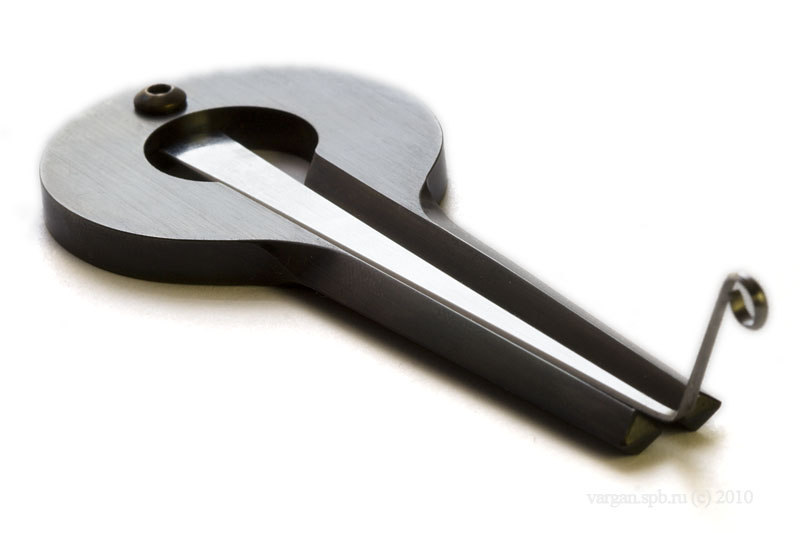
Ustinov Large Jaw Harp
Archived model (?)
|
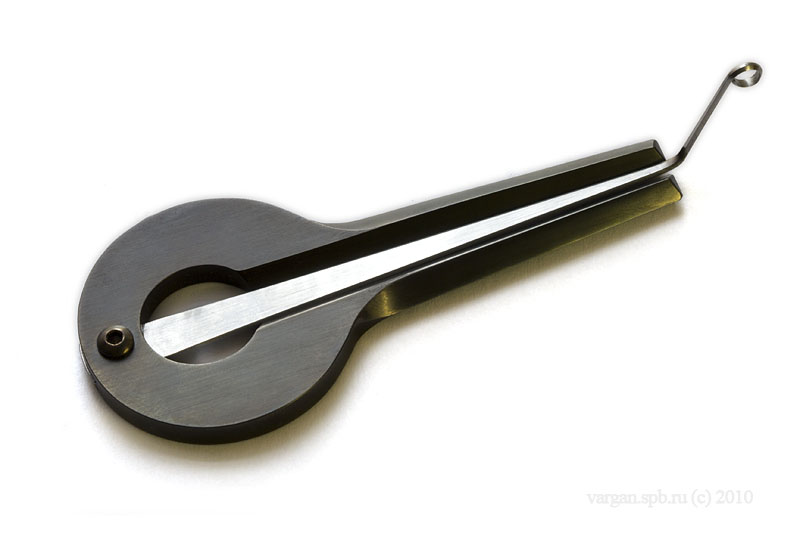
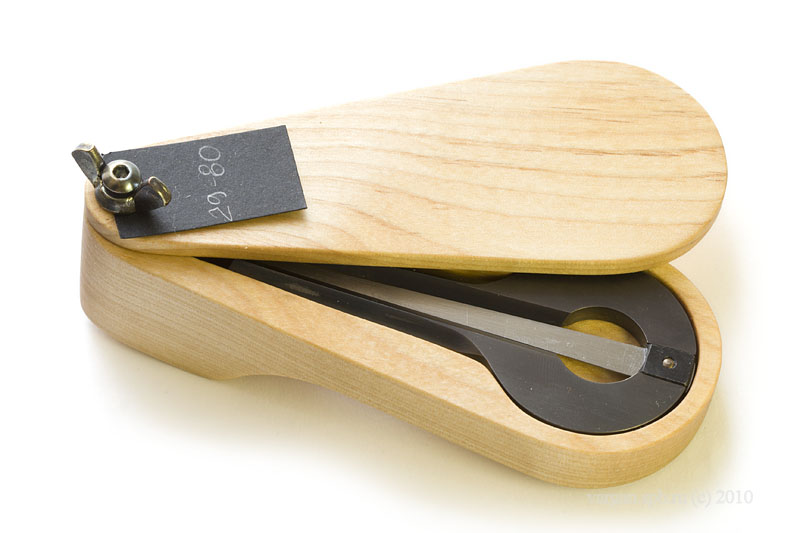
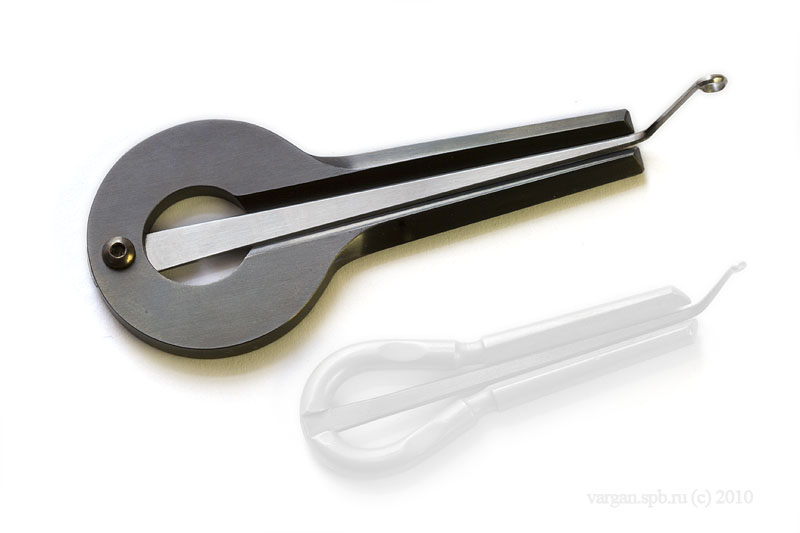
Moscow master Viktor Ustinov is engaged in piece-making of jaw harps of many of the most bizarre shapes and sizes; in addition to steel and brass, even stone was used as a material. Until recently, each instrument existed in a single copy. At the end of 2009, a new series of standardized jaw harps was launched, for those wishing to obtain a instrument with already known characteristics. It is divided into three groups: jaw harps with a length of the reed about 70 mm.small-scale), 75 mm (middle-class) and 80 mmlarge-scale). Everywhere used a massive frame of blued steel of one basic shape, differing in length frame arms; the difference in sound - pitch (short, the higher).
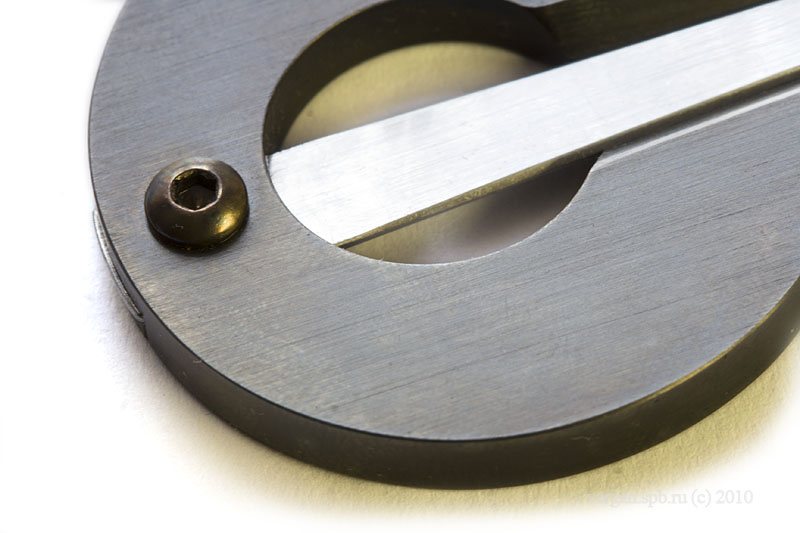
Externally, Ustinov's jaw harps draw attention to the quality of the design and clarity of shapes; the case carved from a thick steel sheet cannot be compressed and can be held with any effort; the gaps are verified quite accurately and provide good responsiveness of the instrument. The sensations of the playing - softness, both physical reed and timbral - the sound does not crack, but trembles. The voice of these jaw harps is quite specific and can become the main criterion for choosing, since controllability and playability are at a high level. Sound is malleable, like clay, and readily, predictably, changed by breath, articulation, force of stroke.
A great choice for beginners, able to provide the most pleasant acquaintance with the world of jaw harps - if you like the timbre itself.
Externally, Ustinov's jaw harps draw attention to the quality of the design and clarity of shapes; the case carved from a thick steel sheet cannot be compressed and can be held with any effort; the gaps are verified quite accurately and provide good responsiveness of the instrument. The sensations of the playing - softness, both physical reed and timbral - the sound does not crack, but trembles. The voice of these jaw harps is quite specific and can become the main criterion for choosing, since controllability and playability are at a high level. Sound is malleable, like clay, and readily, predictably, changed by breath, articulation, force of stroke.
A great choice for beginners, able to provide the most pleasant acquaintance with the world of jaw harps - if you like the timbre itself.