

The Search for the Origins of the Jew's Harp
Michael Wright, Oxford, England
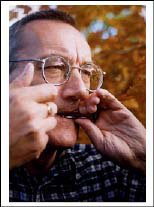 Michael Wright's study asks two deceptively simple questions: why an international instrument should be known in English as the “Jew's harp,” and where the instrument itself came from. The name has no demonstrated connection with Jewish culture. Historical spellings, vernacular names and trade records show that the English term belongs to a much larger and still unresolved history of naming.
What is a jaw harp?
Jaw harps are subtle musical instruments made in a remarkable range of shapes, sizes and playing forms. They are found across Polynesia, Asia, eastern Russia, Europe and the Americas. Instruments known in Africa and parts of the Middle East were often imported from Europe or introduced through colonial trade rather than belonging to an older local tradition.
Every jaw harp brings together three elements: an instrument that generates a vibrating tone, the player's mouth as a variable resonator, and a method of setting the reed in motion. The player continually changes the shape of the mouth, tongue and throat to select harmonics from the reed's spectrum.
Two principal constructions
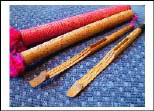
The broadest structural distinction is between idioglot and heteroglot instruments. In an idioglot jaw harp, the reed is cut from the same piece of material as the frame. Such instruments are commonly made from bamboo, wood, bone or a single metal plate and are especially widespread across Asia and Oceania. In a heteroglot jaw harp, the reed is a separate component attached to a frame; the familiar European metal frame jaw harp belongs to this type.
Names and evidence
Researchers have recorded roughly a thousand names for the instrument, and the list continues to grow. These names can preserve traces of trade, borrowing and local identity, but they must be treated cautiously: similar words may travel independently of the object, while one word may refer to different constructions in different regions.
The archaeological record is equally difficult. Organic idioglot instruments decay, while small metal objects can be misidentified or dated only through an uncertain excavation context. Some supposed ancient European jaw harps have later proved to be other objects. Clear medieval European images and surviving finds show the metal frame form already developed, but they do not reveal where it was invented.
Possible routes of development
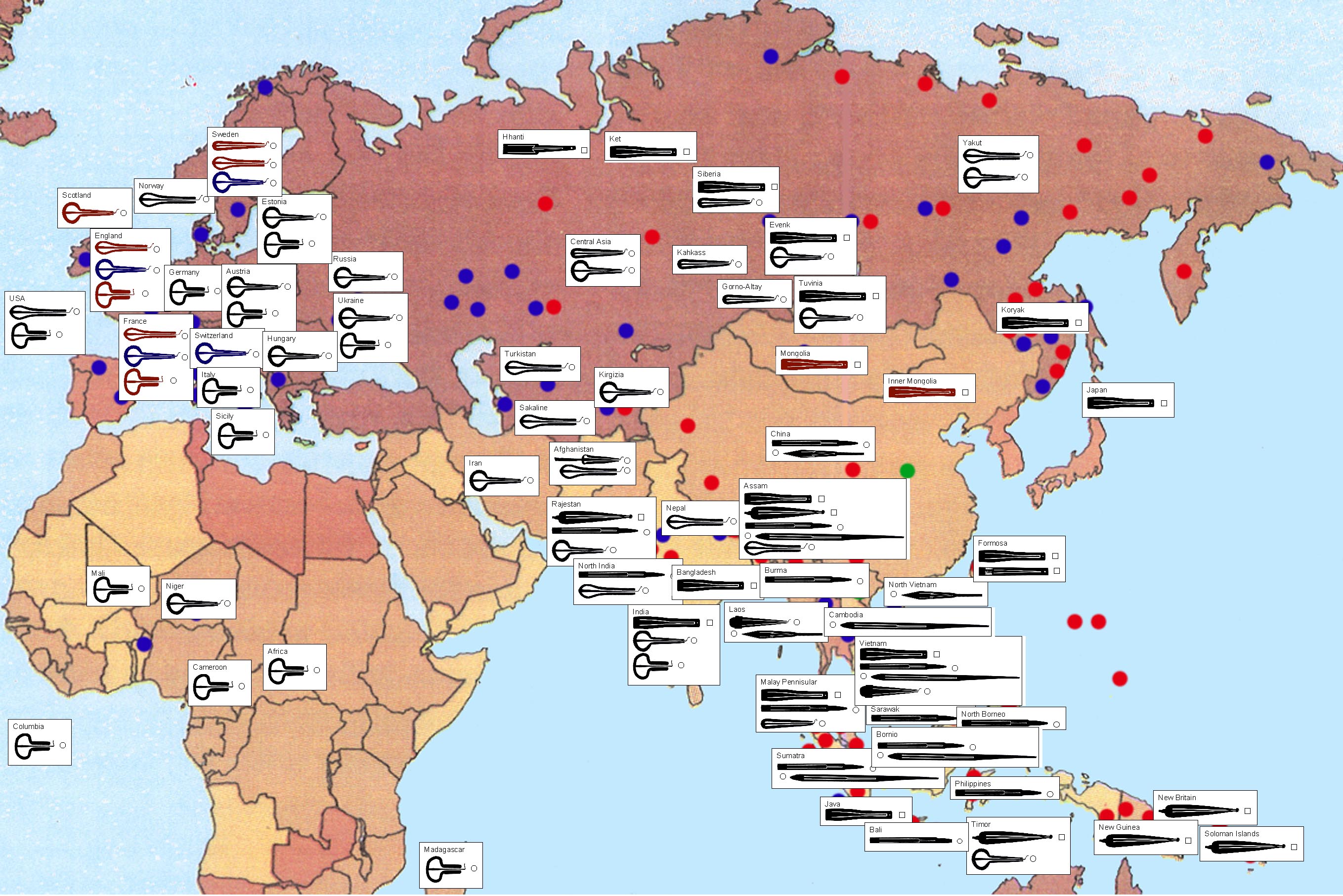
Asian evidence points to a very long history of idioglot forms, including instruments made from plant material. Both idioglot and heteroglot constructions coexist across large parts of Asia, which may indicate a region of development and exchange rather than one simple birthplace. Ancient trade networks brought many peoples into contact across Central and South Asia. A fully formed metal frame jaw harp could then have travelled westwards through one or several routes.
European evidence appears comparatively late and shows the heteroglot metal form without a clear chain of earlier local prototypes. Later European manufacture and global trade carried metal jaw harps to the Americas, Africa and other regions, sometimes supplementing or replacing older local idioglot instruments.
Wright therefore treats any single-origin claim with caution. The available evidence supports an older family of idioglot instruments in Asia and Oceania, a later and technologically distinct metal frame form, and extensive diffusion through trade and migration. It does not yet justify assigning the invention to one modern nation or naming one exact date and place.
Read the original study
This page is an English overview. Michael Wright's complete article, including the evidence, maps, notes and bibliography, is available as The Search for the Origin of the Jew's Harp (PDF). The Russian version on Oberton Pro contains the full Russian translation.